THE BIOSPHERE 2
OVERVIEW
The Biosphere 2: Destination Discovery is an award winning analog horror short film. It serves as the sequel to 2022's The Biosphere: Adventure Awaits! on YouTube. My role was to craft a handful of tracks to be used at various points throughout the film, using a wide range of soundscapes to provide different tones and moods across the project.
AUDIO DESIGN
The first track developed for the soundtrack is designed to feel exciting, welcoming, and fun to listen to. Its gradual buildup establishes a cinematic atmosphere before introducing energetic, punchy chipped-synth chord hits.
Within the project’s context, the track serves as background music for an employee onboarding video. To maintain momentum and keep the energy consistent, the steady beat persists throughout the remainder of the piece.
To subtly hint at the horror elements of the Biosphere, the rhythm of the synth chords becomes increasingly sporadic as the track progresses. While this detail may not be immediately noticeable, it gradually creates a sense of unease, making the music feel slightly chaotic and off-putting beneath its otherwise upbeat tone.

My first solution was a “clamp” layout, which centralized key information in one location. Player health, the active combat form, ability mana, and ultimate charge were all displayed within this structure to keep the interface compact and easy to reference.
Playtesting revealed that while the interface was contained, players still struggled to understand which elements corresponded to specific abilities or actions.
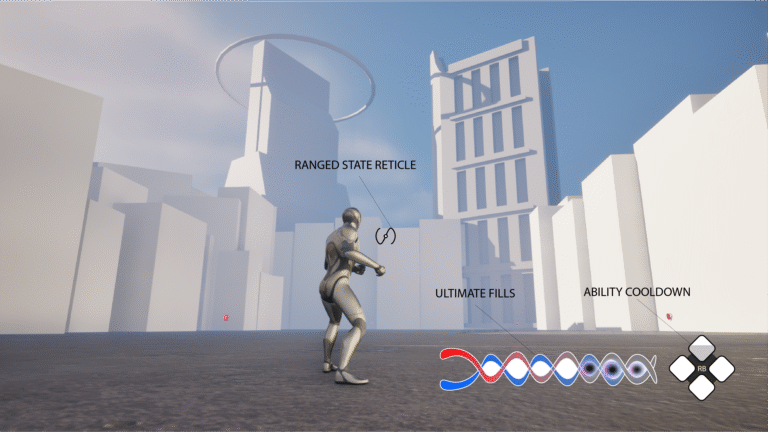
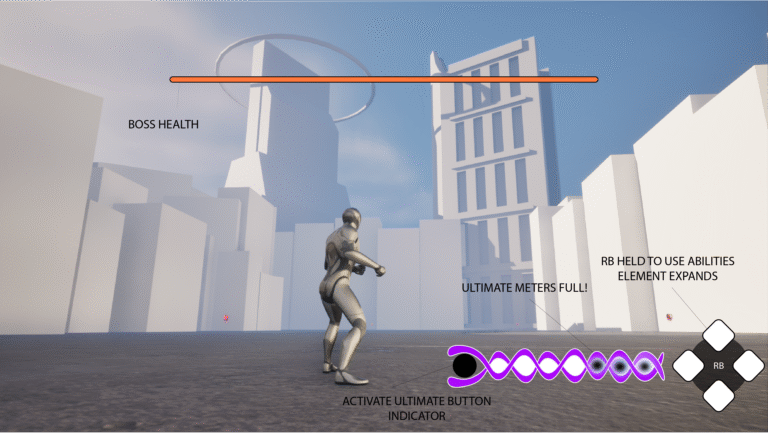
In response, I created a second iteration that focused on improving clarity. Key improvements included notched health for clearer health tracking, a shell system that visually indicated mana buildup, and a dedicated ability diamond that reacted to player input.
Although promising, this design was ultimately cut. The health system was not built to support notched health, and the increased number of UI elements made the interface feel less cohesive than the earlier clamp layout.
Around this time, the gameplay design also evolved. Ultimate forms were removed, and mana was instead used to activate form-specific abilities. This simplified the combat system and significantly reduced the amount of information the interface needed to communicate.
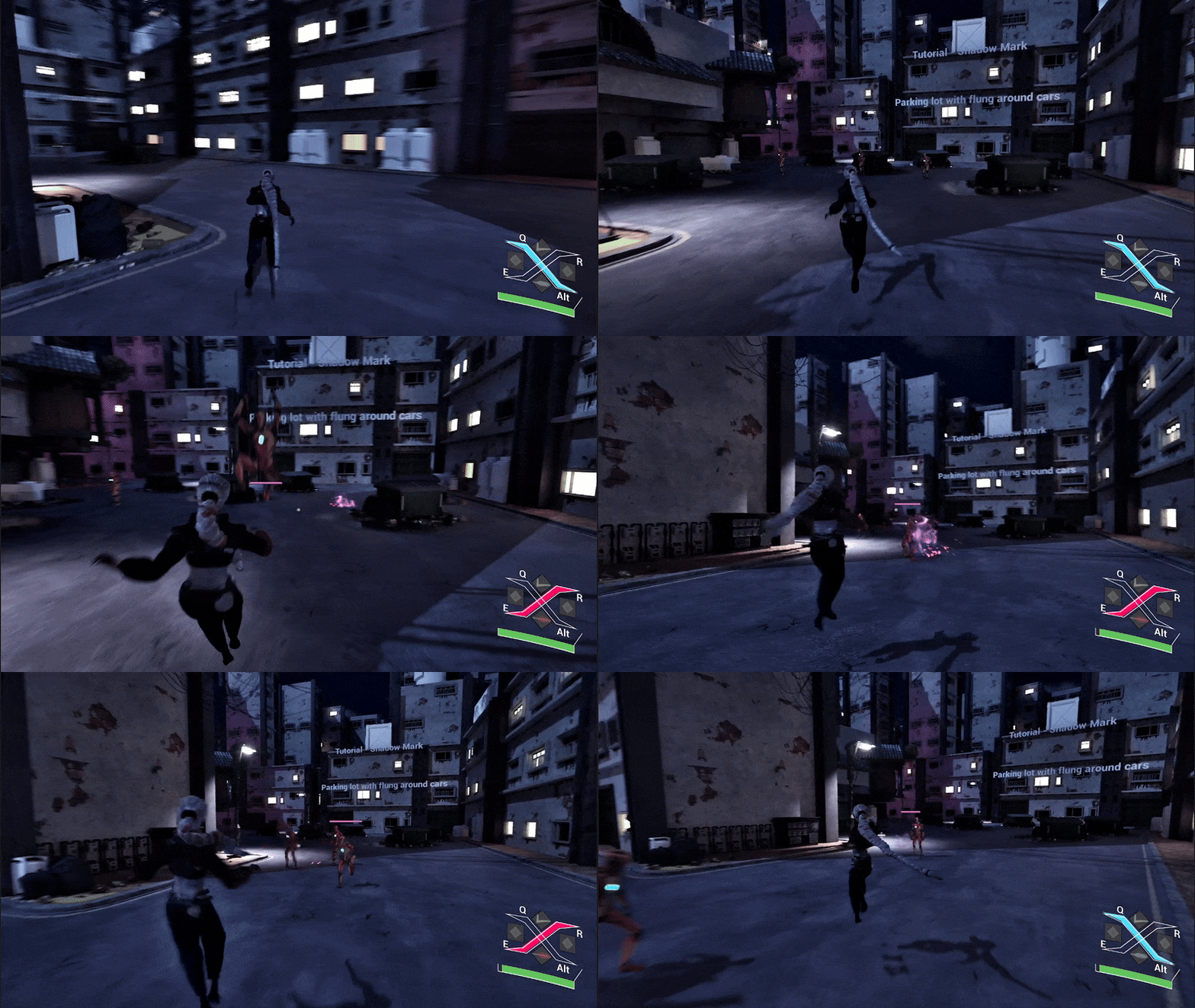
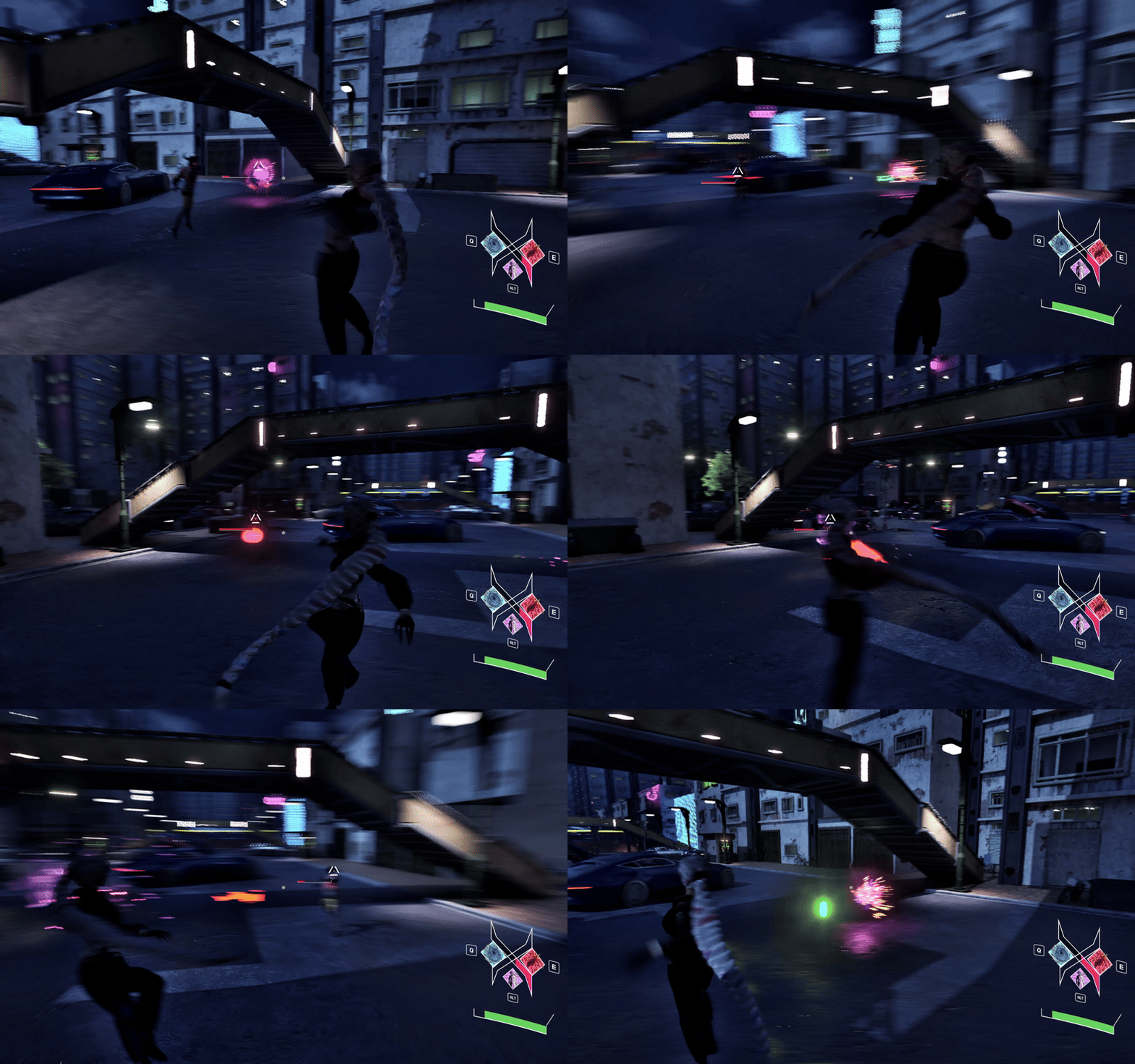
These changes led to the final concept: the Hel-X. Inspired by the earlier ability diamond, the Hel-X arranged abilities in a diamond formation while using the spaces between them to display mana through intersecting progress bars. These bars only appeared when their corresponding combat stance was active, reducing visual clutter while still communicating critical information.
The health bar was placed beneath the Hel-X to keep the player’s attention centered in one area. However, the original design intent—evoking a double helix—was not immediately clear.
Rotating the Hel-X 90 degrees solved this problem, giving the interface a more vertical structure that visually reinforced the double-helix concept.
Finally, the diamond layout aligned naturally with the controller’s button layout, providing an intuitive mapping between inputs and abilities and significantly improving the overall user experience.