UI/UX, NARRATIVE & AUDIO DESIGN

DUAL SHADOWS

OVERVIEW

DUAL SHADOWS is a third person action game set in a near-future urban environment. My work consisted of a variety of design roles, which allowed me to connect threads between each, unifying the experience for the player.

  • Team Size: 13 Core Developers + 4 Contractors

  • Development Time: 9 months

  • Engine: Unreal Engine 5

  • Released: June 2025

  • Platform: Windows

Play for FREE on Steam & itch.io!

From August to December 2024, I served as Team Lead/Producer for Dual Shadows, where I implemented SCRUM and Agile practices for a team of eight developers while also contributing to design. In this role, I strengthened my understanding of production pipelines, cross-discipline communication, conflict resolution, and industry-standard management tools such as Jira and Confluence.

As the Team Lead some of my responsibilities included:

  • Coordinating meetings, creating meeting objectives and agendas.
  • Directing teammates to participate in the daily stand-up and share updates on their tasks.
  • Writing meeting notes to keep track of action item progress.
  • Holding one-on-ones with each teammate to get their personal, unfiltered takes on the project.
  • Opening and closing sprints, setting sprint goals and prioritizing the backlog.
 

From January to April 2025, the team expanded to 13 developers with the addition of five new members, and I was selected to transition into the role of Lead Designer. In this position, I retained ownership of the game’s UI/UX while also leading the narrative design, including the script, dialogue systems, and voice acting.

As the Lead Designer I took what I learned from my previous production role as “Team Lead” and applied it to running the design team. This helped maintain organization and consistent communication not only with other disciplines, but between designers as well.

Three key decisions I had to make in this role were: 

  • How to structure the linear, but open levels. 
  • Whether or not to introduce a new mini-boss enemy type.  
  • Whether to cut or to keep the second boss.



Early in development, the team selected a prototype built around two combat forms: ranged for precision and melee for crowd control. The goal was to emphasize the duality between these playstyles while giving players the freedom to approach encounters however they preferred. Each form included its own ability, ultimate, and a combined ultimate when both mana pools were full. My primary objective was to communicate these mechanics clearly through the UI without cluttering the screen or slowing the pace of gameplay.

My first solution was a “clamp” layout, which centralized key information in one location. Player health, the active combat form, ability mana, and ultimate charge were all displayed within this structure to keep the interface compact and easy to reference.

Playtesting revealed that while the interface was contained, players still struggled to understand which elements corresponded to specific abilities or actions.

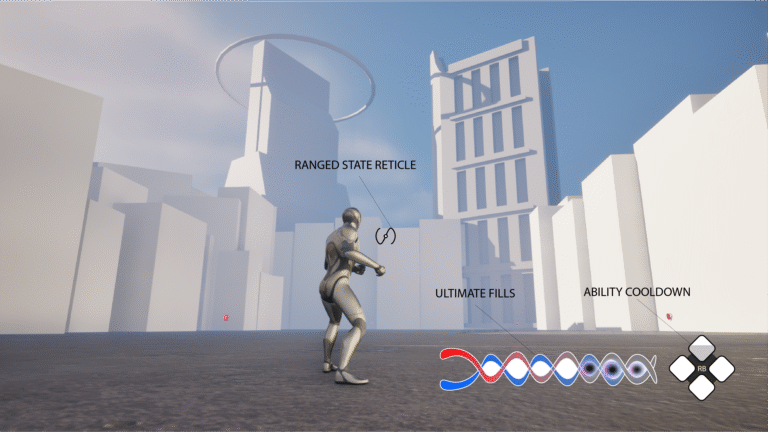
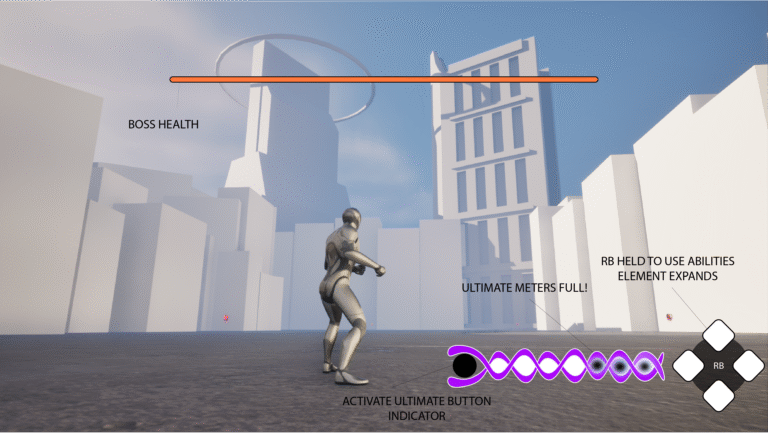
In response, I created a second iteration that focused on improving clarity. Key improvements included notched health for clearer health tracking, a shell system that visually indicated mana buildup, and a dedicated ability diamond that reacted to player input.

Although promising, this design was ultimately cut. The health system was not built to support notched health, and the increased number of UI elements made the interface feel less cohesive than the earlier clamp layout.

Around this time, the gameplay design also evolved. Ultimate forms were removed, and mana was instead used to activate form-specific abilities. This simplified the combat system and significantly reduced the amount of information the interface needed to communicate.

Second HUD wireframe iteration, ultimate charging up.
Second HUD wireframe iteration, ultimate ready to use.

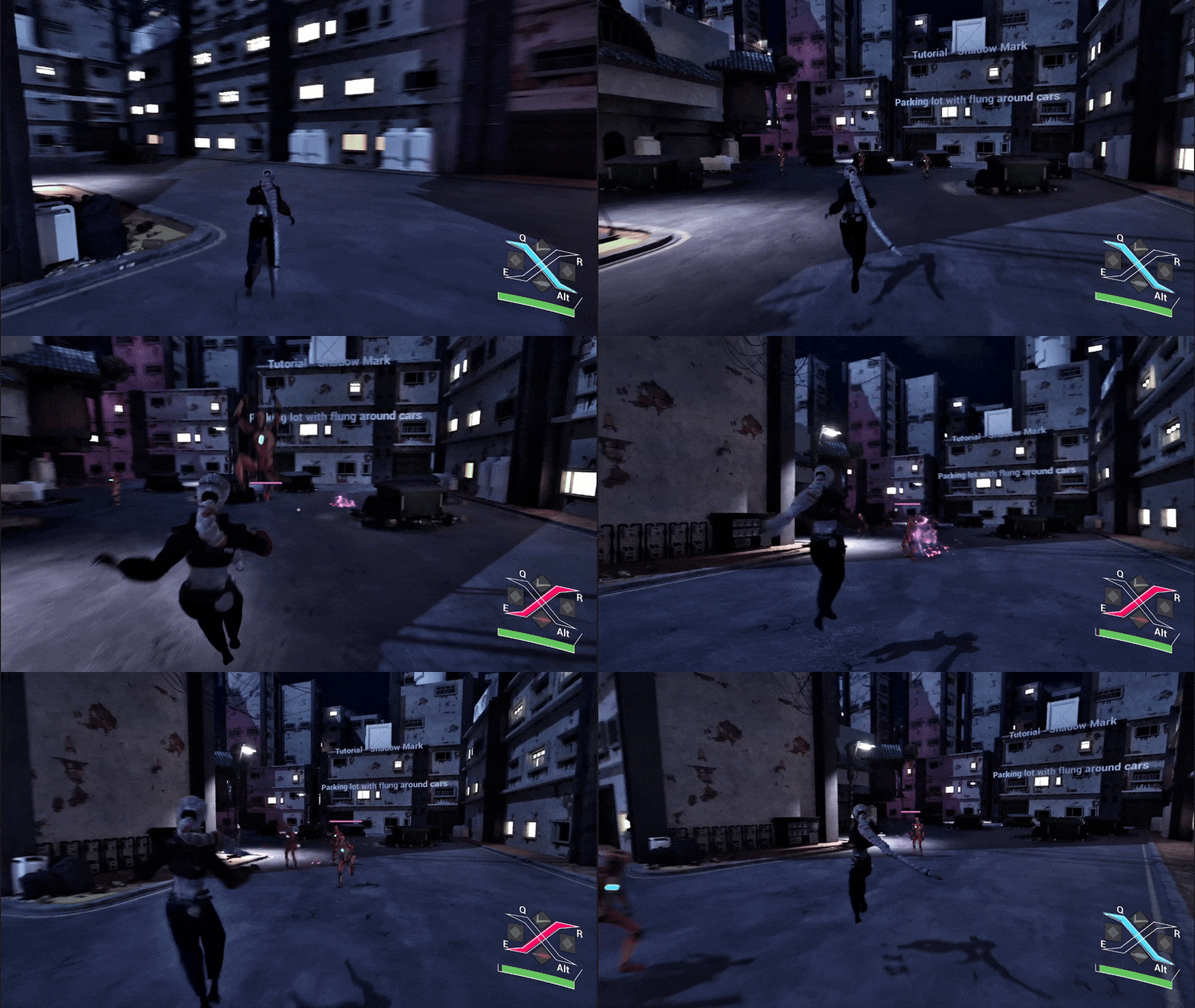
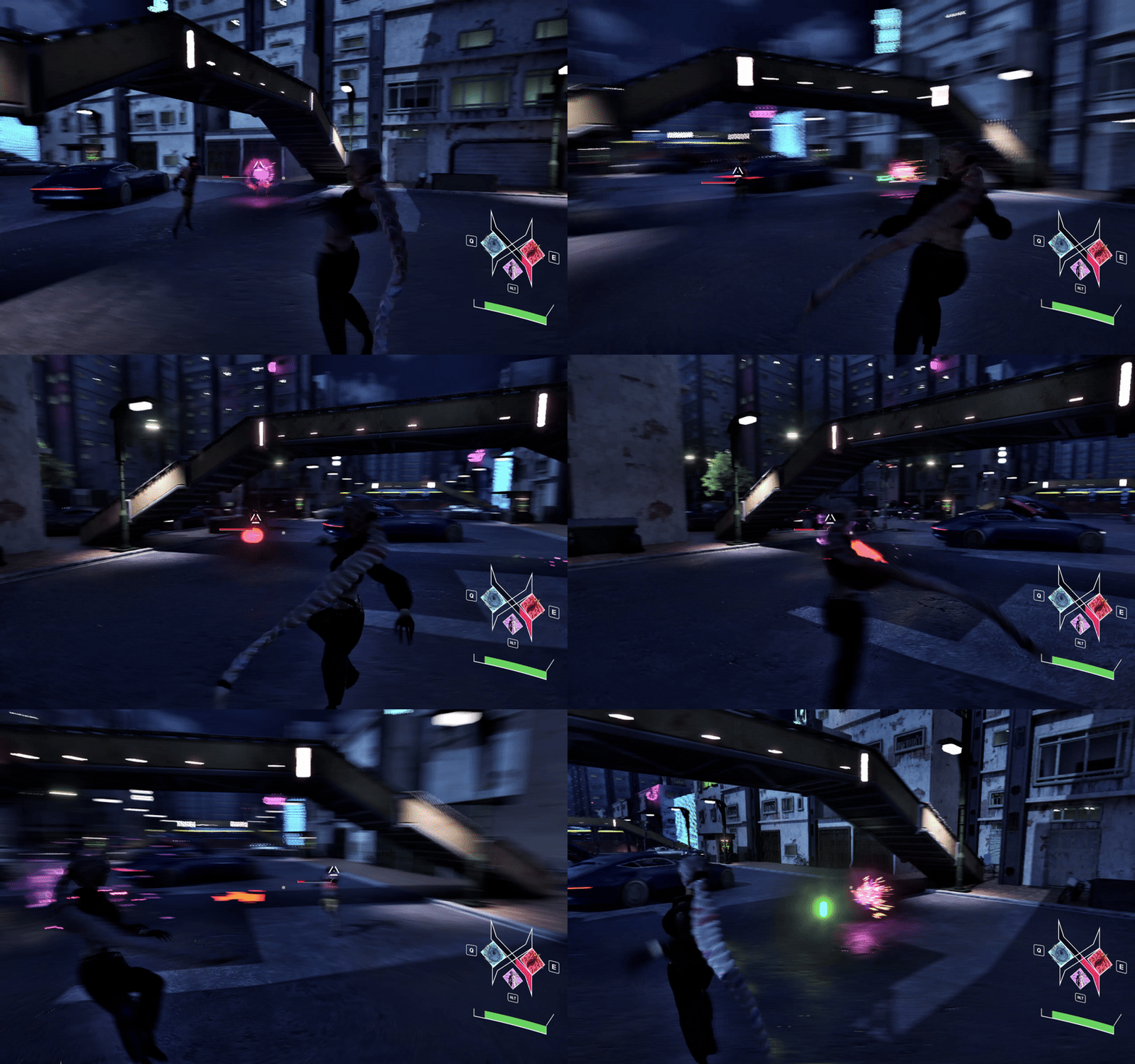
These changes led to the final concept: the Hel-X. Inspired by the earlier ability diamond, the Hel-X arranged abilities in a diamond formation while using the spaces between them to display mana through intersecting progress bars. These bars only appeared when their corresponding combat stance was active, reducing visual clutter while still communicating critical information.

The health bar was placed beneath the Hel-X to keep the player’s attention centered in one area. However, the original design intent—evoking a double helix—was not immediately clear.

Rotating the Hel-X 90 degrees solved this problem, giving the interface a more vertical structure that visually reinforced the double-helix concept.

Finally, the diamond layout aligned naturally with the controller’s button layout, providing an intuitive mapping between inputs and abilities and significantly improving the overall user experience.

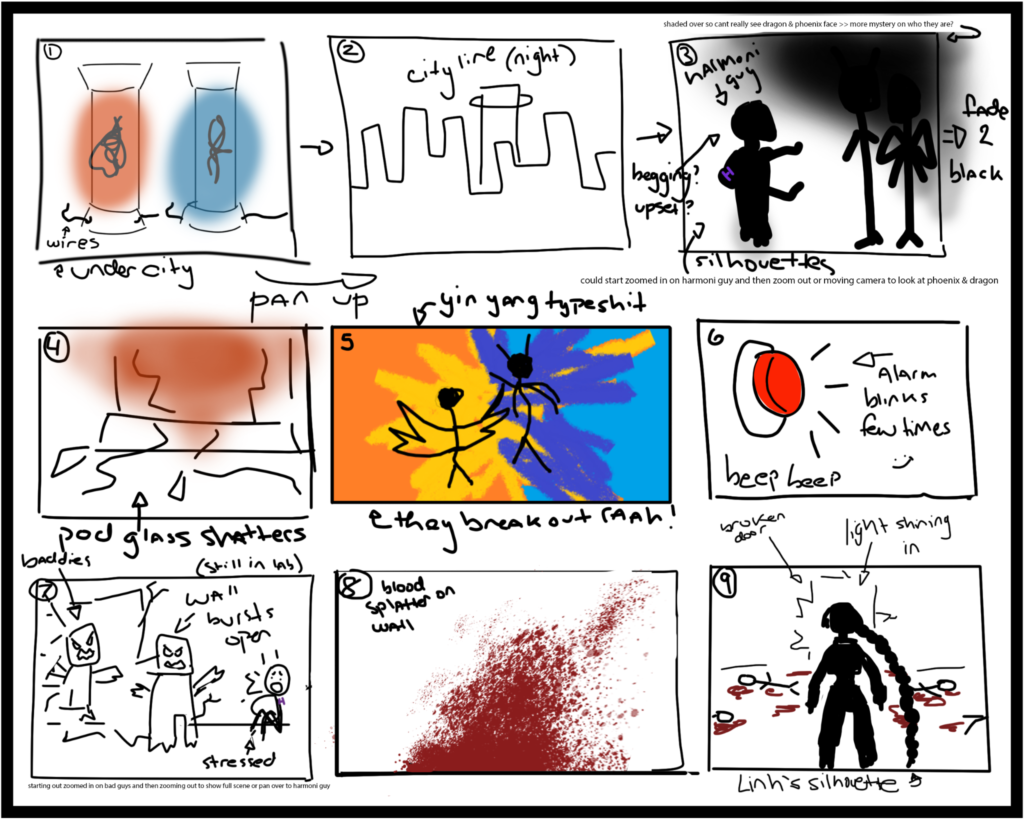
Storyboard of the opening scene that did not make the final product.

Narrative development became a major focus during production. I rewrote the story three times to ensure it remained within scope while delivering a script the team could feel confident presenting.

Early plans included 2D comic-style cutscenes placed before and between major gameplay segments to provide exposition and stronger pacing. While these sequences helped structure the narrative, they were ultimately cut during production.

Despite this, developing the world of Pulsanh, its characters, and the context surrounding the game’s events remained one of the most rewarding aspects of the project.

A key challenge was designing the narrative around meaningful player choice that affected both story and gameplay. This was achieved through a mechanic that allowed players to either absorb or release defeated bosses. Each decision altered the player’s narrative path while granting unique combat abilities.

The most complex scenario arose when players chose to absorb one boss but release the other. To resolve this, I introduced unique dialogue followed by a third and final choice, allowing players to determine their own outcome. This approach placed the ultimate narrative agency in the player’s hands and ensured that the story’s resolution reflected their decisions.

Ultimately, the narrative evolved into a system that placed player choice at the center of the experience. By tying story outcomes and gameplay abilities to the same decisions, the design allowed the player’s actions to shape both the narrative and the way they interacted with the world.